Market Guides
In-depth guides to navigating specific asset classes and market conditions. Understand the unique characteristics, drivers, and opportunities in each market.
Start Learning
$7.5T+
Daily forex volume
24/7
Crypto market hours
100+
Commodity markets
3,000+
Instruments available
Cryptocurrency markets
Cryptocurrency markets operate 24 hours a day, 7 days a week, making them one of the most accessible asset classes for global traders. Unlike traditional financial markets that close on weekends and holidays, digital assets trade continuously across decentralized exchanges and centralized platforms worldwide.
The cryptocurrency market is dominated by Bitcoin (BTC) and Ethereum (ETH), which together account for the majority of total market capitalization. However, the broader ecosystem includes thousands of altcoins, each with unique use cases — from decentralized finance (DeFi) protocols and smart contract platforms to stablecoins and layer-2 scaling solutions.
Volatility in cryptocurrency markets is significantly higher than in traditional asset classes, creating both opportunities and risks. Price swings of 5-10% in a single day are common, and even larger moves occur during major market events. This volatility demands robust risk management and position sizing discipline, but also offers substantial profit potential for well-prepared traders.
Key takeaways
- Crypto markets trade 24/7 — plan your risk management for continuous exposure
- Bitcoin and Ethereum dominate, but altcoins offer diversification opportunities
- On-chain data provides unique analytical insights unavailable in traditional markets
- Regulatory developments across jurisdictions significantly impact crypto prices
Forex trading guide
The foreign exchange (forex) market is the largest and most liquid financial market in the world, with daily trading volumes exceeding $7.5 trillion. Currencies are traded in pairs — when you buy EUR/USD, you are simultaneously buying euros and selling US dollars. Understanding this dual nature is fundamental to forex trading.
Forex prices are influenced by macroeconomic factors including interest rate differentials between central banks, inflation data, employment figures, GDP growth, and geopolitical events. Central bank policy decisions — particularly from the Federal Reserve, European Central Bank, and Bank of Japan — are among the most significant price drivers.
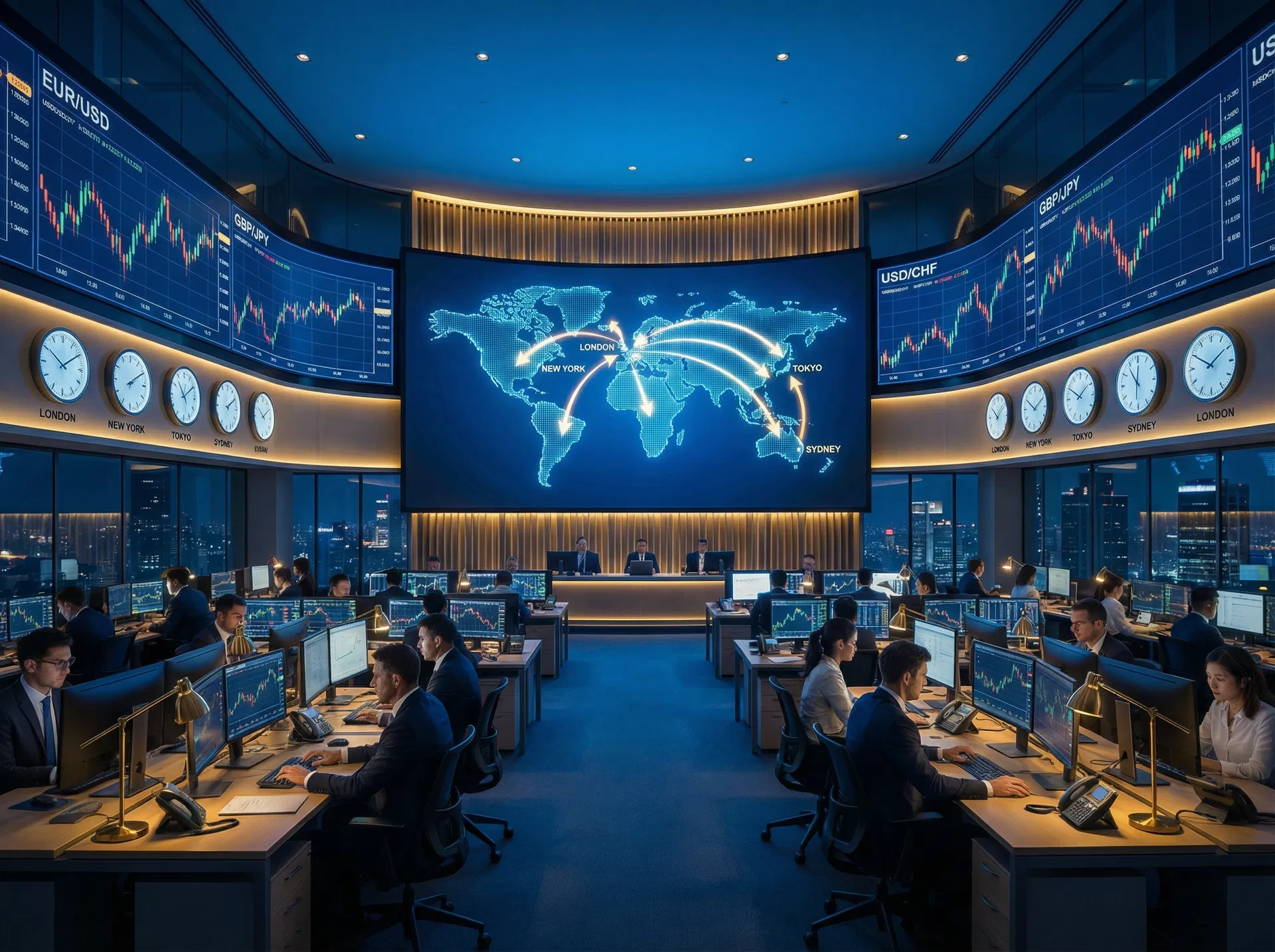
The forex market operates across four major trading sessions: Sydney, Tokyo, London, and New York. The highest liquidity and tightest spreads typically occur during session overlaps, particularly the London-New York overlap (1:00 PM to 5:00 PM GMT). Understanding these dynamics helps traders optimize their entry timing and reduce trading costs.
Key takeaways
- Major pairs (EUR/USD, GBP/USD, USD/JPY) offer the tightest spreads and highest liquidity
- Interest rate differentials between central banks drive long-term currency trends
- Session overlaps provide the best trading conditions with maximum liquidity
- Economic calendar events create short-term volatility and trading opportunities
Commodities overview
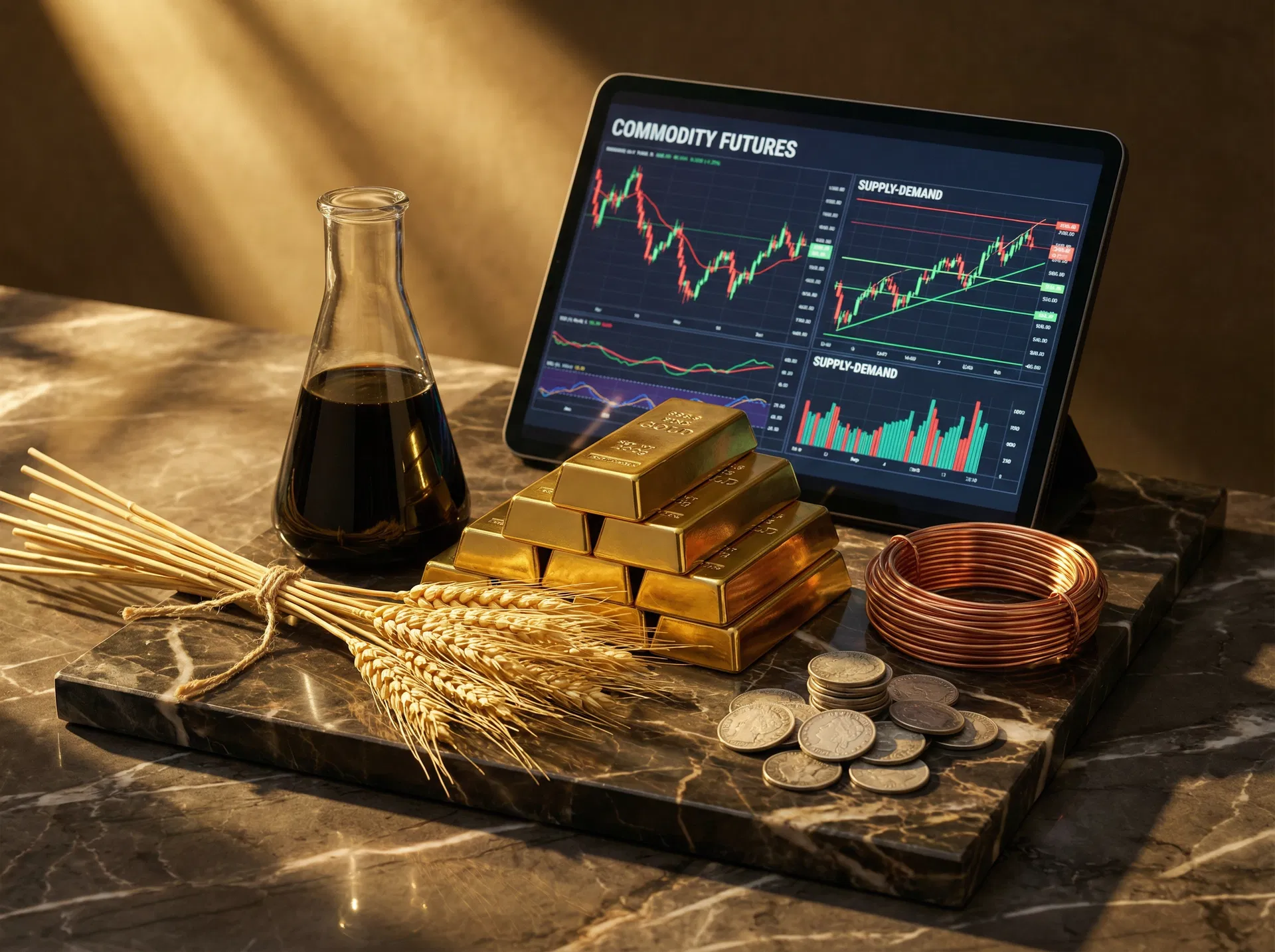
Commodities are raw materials and primary agricultural products that can be bought and sold on exchanges. They fall into four main categories: energy (crude oil, natural gas), precious metals (gold, silver), industrial metals (copper, aluminum), and agricultural products (wheat, corn, coffee). Each category responds to different economic and geopolitical drivers.
Gold has historically served as a safe-haven asset and inflation hedge. During periods of economic uncertainty, geopolitical tension, or currency debasement, investors flock to gold as a store of value. Its price is inversely correlated with real interest rates — when rates fall or inflation rises, gold typically appreciates.
Crude oil is the world's most actively traded commodity, with prices driven by the balance between global supply (OPEC+ production decisions, US shale output) and demand (economic growth, seasonal patterns, transportation activity). Geopolitical events in oil-producing regions can cause sudden price spikes, making oil markets particularly sensitive to news flow.
Key takeaways
- Gold serves as a portfolio hedge against inflation and geopolitical uncertainty
- Oil prices are driven by OPEC+ decisions, economic growth, and geopolitical risk
- Agricultural commodities are influenced by weather patterns and seasonal cycles
- Commodity futures allow traders to speculate on price movements without physical delivery
Continue Your Learning Journey
Explore our comprehensive suite of guides and resources, designed to build you up from a novice trader to a seasoned market participant.